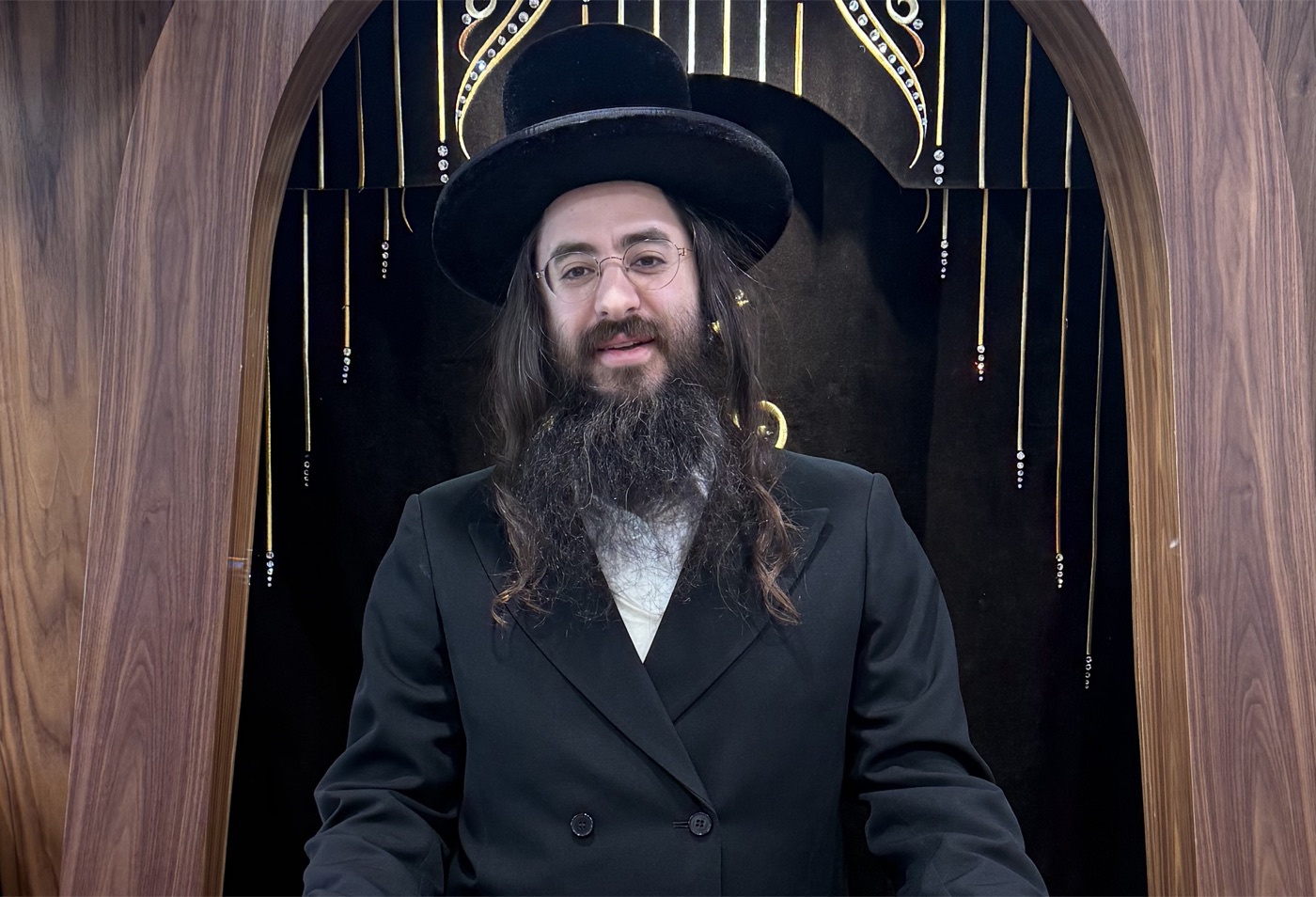
Rabbi Chaim Ozer Geldzahler
Shiurim on Navi, the Megillos, Gemara and Teshuvah, in English and Yiddish, given at Beis Midrash Tiferes Eliezer in Toms River. Every new shiur appears here as soon as it's posted.
and counting
Latest shiurim
Series
Pick a series to see every shiur in it.
On YouTube
Bring Rabbi Geldzahler to your community
Shabbatons, shul and school events, simchas, community gatherings and yeshivos, in English or Yiddish.
Every shiur, in one place
His full TorahAnytime library and YouTube channel. New shiurim show up here on their own.
Short clips
Short videos from the Tiferes Eliezer YouTube channel. New ones appear here as soon as they're posted.
“The Torah is not afraid of my questions.”
Rabbi Chaim Ozer Geldzahler lost his father when he was eleven years old. Today he teaches Torah the way his father lived it: with joy, with honesty, and with room for every question.
Read his story ↓A chain of Torah that runs through Kelm, Queens, Brooklyn and Lakewood
Rabbi Chaim Ozer comes from a family whose Torah has shaped yeshivos on both sides of the ocean for a hundred years.
-
Great-grandfather
Rav Eliyahu Eliezer Dessler zt”l
Author of Michtav M’Eliyahu and one of the great thinkers of the mussar movement, shaped by the yeshiva of Kelm.
-
Grandfather
Rav Eliyahu Yehoshua (Shea) Geldzahler zt”l · 1926–2015
Talmid of Torah Vodaas under Rav Shraga Feivel Mendlowitz. He married Rav Dessler’s daughter and founded Yeshiva Ohr Yisroel in Queens, where he taught for four decades. He hired real talmidei chachamim as rebbeim and set no limit on how much a boy could learn.
-
Father
Rav Eliezer (Reb Leizer) Geldzahler zt”l · niftar 2004, at 46
Named for Rav Dessler, he learned under Rav Elya Ber Wachtfogel, Rav Dovid Soloveitchik and in the Lakewood kollel, then founded Yeshiva Ohr Yisroel in Brooklyn. He changed chassidishe yeshivos by pairing serious learning with pure joy. His favorite word was “Gevaldig!”
-
Today
Rabbi Chaim Ozer Geldzahler
On his mother’s side, he is a grandson of Rav Michel and Rebbetzin Feige Twerski of Milwaukee, part of the Hornosteipel chassidic dynasty. He was born and raised in Lakewood and calls himself “Lakewood through and through.”
The winter everything changed
In January 2004, Reb Leizer traveled to Eretz Yisroel to gather his former talmidim for a Shabbaton in Teveria. Near Netanya, the bus he was riding on crashed. He was critically hurt and never woke up.
For ten months he lay in a coma. His wife, Rebbetzin Baila, a nurse, brought him to the yeshiva’s summer home so he would be surrounded by the sound of learning and by his family. A baby son was born during those months.
On the ninth of Kislev he passed away, at forty-six. Thousands came to the levaya. He left behind thirteen children. Chaim Ozer was eleven.
Just hold the pain
He still remembers the shivah: the crowds, the kind people who meant well, and the words that hurt anyway. One visitor told the young boy “mazel tov” on getting a new father.
Years later he wrote about it in Mishpacha magazine in 2021, right after the Meron tragedy. His message was that when people are grieving, the greatest kindness is not an explanation or a silver lining. It is sitting with them in silence and sharing the pain. He brought a story of his own ancestor, Reb Mottele of Hornosteipel, to show that a person has to feel his pain fully before he can come to accept it with love.
“You don’t have to walk him his whole journey. You can’t solve his problem. You just have to walk him a few steps.”
From Lakewood to Yerushalayim to Toms River
Lakewood
He grew up in Lakewood, where his mother still lives. She is a nurse who is known across the community for helping people.
Yerushalayim
After his marriage he moved to Eretz Yisroel. There he studied in the Institute for Dayanim and taught at The Chaburah.
Toms River
About two and a half years ago he came back to America and began giving shiurim at Beis Midrash Tiferes Eliezer, a name that carries his father’s.
It started with a simple question in shul: why don’t we record it? Someone put the shiurim on YouTube, and people started watching. Then his wife’s uncle kept pushing until he joined TorahAnytime. Today he has more than 790 shiurim there.
He even asked TorahAnytime to hide his view counts, because he didn’t want to be chasing numbers.
Put down the five-year-old’s version. Open the text.
Many of us still picture the Megillah as a school Purim play and Navi as stories from second grade. Rabbi Geldzahler asks you to read them as an adult, with real people, real questions, and real pain, and then watch Rashi, Ramban and Ibn Ezra come alive around you.
Read it as an adult
“Life isn’t kid friendly. Grow up. Go to the text.” Tanach tells hard stories about great people on purpose. What matters is how they got up again.
No question is off-limits
Sefer Iyov is mostly hard questions, and Chazal kept it in Tanach. “The Torah is not afraid of my questions.” A twenty-year-old asking questions deserves real answers.
Let’s walk together
“I don’t have all the answers. I have a lot of questions.” He doesn’t teach from the top of a mountain. He calls his shiurim a walk that everyone takes together.
Taste and see
Ta’amu u’re’u ki tov Hashem. If one kind of shiur doesn’t speak to you, try another. His own shiurim range from Daf Yomi to Navi, Pirkei Avos and the Rambam.
Watch the interview
In TorahAnytime’s Behind the Lens, Rabbi Geldzahler talks about his father, growing up without him, how he learns, and why he believes the Torah has room for every person.
Explore his series
טַעֲמוּ וּרְאוּ כִּי טוֹב ה׳
Taste, and see that Hashem is good.
Bring Rabbi Geldzahler to your shul, school, Shabbaton or simcha.
Book Rabbi Geldzahler
Invite Rabbi Geldzahler to speak at your shul, school, Shabbaton, simcha or community event.
- Shabbatons and Shabbos drashos
- Shul, school and yeshiva events
- Yamim Tovim, Elul and Aseres Yemei Teshuvah
- Simchas, siyumim and community gatherings
- English or Yiddish